1) Parents As Role Models: Be A Charismatic Adult
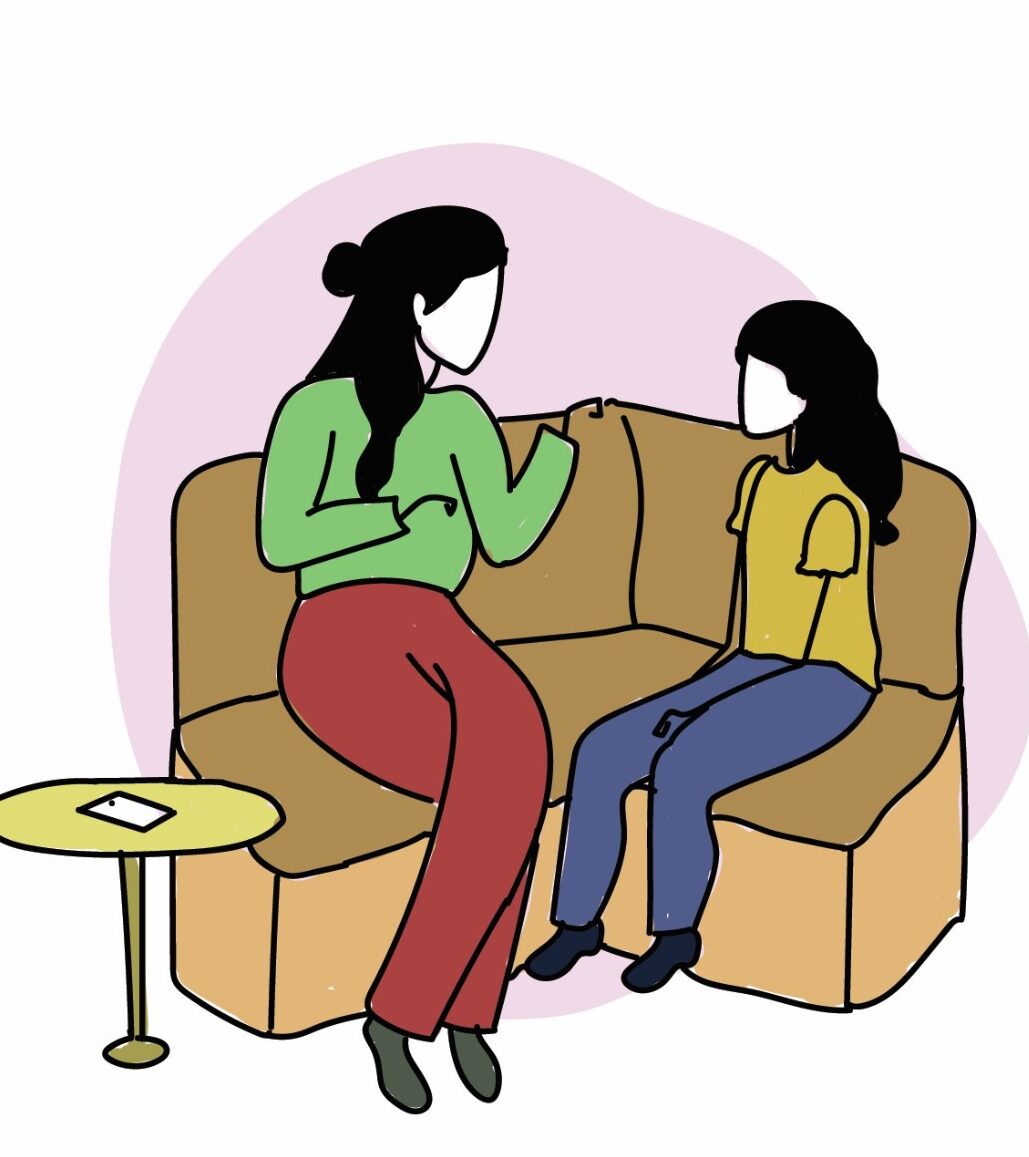
Psychologist Julius Segal has done pioneering work on resilience. Studies done on adults that have overcome adversities have one common thread - presence of an adult who believes in them and stands by them in all situations. This charismatic adult provides strength and confidence to children to deal with life disruptions. As parents, educators, it is incumbent on us to play the role of that Charismatic Adult. The art of building resilience among children starts with us. Before demanding any change from our children, we must set our own emotional suitcase in order. As parents we might be dealing with our own mid-life crisis and we may project our anxieties on children. We must do an honest introspection and ask ourselves: Am I anxious/stressed? Am I dealing with a few issues of my own? If you are, please take some time out for your own healing. Do work on your own emotional health and build your own resilience quotient. A fundamental truth of parenting is that children don’t listen to parents but follow their habits. Mental health is the single biggest health challenge in the twenty-first century. Don’t be in a rush to fix the issue. Your sheer presence and acknowledging the struggle can help your child deal with it. At home, an environment of care, compassion and empathy will provide a bedrock of future growth. When you see your child stressed, an honest, open, non-judgemental conversation can go a long way in providing comfort and building coping mechanisms. Your house is a crucible for your children to experience life and learn skills for lifetime. Think of it like a sandpit. You can be their coach/guide. Your own resilience, attitude to life is the foundation of your children’s future.2) Create Space For Failures And Put Focus On Efforts
Is failure a taboo ‘f’ word in your household? Is there a premium on academic or monetary or social success? Most parents in unambiguous terms articulate their desire for ‘happiness’ for their children but there are many subtle hints: cues where success gets talked about in glowing terms. Children are sensitive to understanding these hints that will get their parents' approval or censure. If failures or below-par performance are seen as life-threatening moments, they will steer to safe spaces and avoid any difficult work. However, as we know, life has its own plans. What is needed is the shift of the spotlight. Can the gaze be turned towards sincere efforts? Can we put a premium on struggle? Can we measure the efforts and not the outcome? It is not easy. It requires a fundamental shift. With a little refocusing, struggle can be normalised and resilience finds space to grow. It will be wonderful if we can make reading and reciting poetry a part of our regular conversations. Poetry and music have a way to open our hearts and enrich our soul. In poetry, struggle assumes a higher order. Poets create high art from mundane sisyphean tasks. It lifts life’s prosaic existence to soul stirring highs and offers hope. A resilient mind learns that struggle is part of life and a higher virtue. American poet Langston Hughes says it eloquently in his poem, Still Here: Still Here I been scarred and battered. My hopes the wind done scattered. Snow has friz me, Sun has baked me, Looks like between 'em they done Tried to make me Stop laughin', stop lovin', stop livin'-- But I don't care! I'm still here!3) Expand Emotional / Social Vocabulary
Studies among students have found a positive correlation between higher emotional intelligence and resilience. Youngsters with higher emotional and behavioural self-control demonstrate greater control over their environment. Most of us have very limited emotional vocabulary - sad or happy; success or failure; good or bad. Professor Lisa Feldman Barrett in her book How Emotions Are Made talks of emotional granularity. She writes: “If you could distinguish finer meanings within “Awesome” (happy, content, thrilled, relaxed, joyful, hopeful, inspired, prideful, adoring, grateful, blissful…) and fifty shades of “Crappy” (angry, aggravated, alarmed, spiteful, grumpy, remorseful, gloomy, mortified, uneasy, resentful,...) your brain would have many more options for predicting, categorising, and perceiving emotions, providing you with the tools for more flexible and functional responses. You could predict and categorise your sensations more efficiently, and better tailor your actions to your environment.” We can have some fun with it by adding a few more words to our vocabulary. Borrowing from Barrett's book again: …”words like Dutch emotion of togetherness, gezellig, and the Greek feeling of major guilt, enohi. Each word is another invitation to construct your experiences in a new way.”4) Play Sports
I see being resilient as an activity to be worked upon for our lives. For that, nothing works like sports. There is no better human endeavour than mastering a sport. Playing a sport (any sport) instils temperament. It drills you to learn to deal with success and failure. You may fail to take the simplest of catches and in the next moment you can perform the sublime athletic feat and then make a stupid mistake again. Sports teaches us to deal with the vagaries of life in equal measures. Another important aspect of sports is self talk. In critical moments, we all need a feedback loop. Sports present difficult situations and demand a quick problem solving attitude. Over a period of time, we learnt to take action and give it a try. There is empirical evidence to suggest “... regular exercise works as a “controllable stressor” which can essentially accelerate the clinical development of coping mechanisms within the individual. That is, stress is induced and then controlled by the very process of exercise. More recent research focuses on the mechanisms by which emotional regulation is optimised by counteracting the effects of stress upon the individual (Bernstein and McNally, 2018).”5) Locus Of Control
In studies done on people who went through life altering events, the most resilient ones were those who never surrendered their right to choose their own framework. One of my all time favourite books is Man’s Search for Meaning. Viktor Frankl's book should be a compulsory reading for all youngsters. Writing from his own experiences as a prisoner in the concentration camp, he exhorts us to change our perspective rather than changing the world. “Everything can be taken from a man but one thing: the last of the human freedoms - to choose one’s attitude in any given set of circumstances, to choose one’s own way.” The concept of the source of control refers to a human's ability in controlling conditions and environmental events. It also represents the degree to which one believes that they have control over the outcome and it is not influenced by luck or fate. So, how do we help adolescents in developing their locus of control? The adolescent age has a significant component of ‘fitting in’ social groups. This is the age when youngsters are learning to form social relationships. Peer groups are an important source of information and provide social validation. A supportive school and peer group can play an influential role in developing healthy control. Research indicates that “academic achievement and locus of control are related in important ways. Perceived control affects behaviour and emotion; a greater sense of control leads to more enthusiasm and beliefs about success in academic settings.” Also Read: The Pandemic Fatigue Is Real, Parents! Help Kids In Coping With It I genuinely believe that we as responsible adults - parents and educators or coaches - can play a critical role. The first step in this direction is to start a conversation around resilience and develop a mindset that steps can be taken to foster resilience.At EduPeer, we can help you with all your college admission needs, from choosing the right country and subjects for you to college lists, resume building, interview preparation and much more. Book a free consultation by clicking on the button and filling in the details below.
[button size="medium" style="white" target="_blank" hover_type="default" text="BOOK AN APPOINTMENT" link="https://app.popt.in/APIRequest/click/ba98c275f606a" background_color="#ae0318"]